
Understanding Your Florida Crash Report
After a motor vehicle accident, one of the most important documents you may receive is your Florida Traffic Crash Report. This report contains the investigating officer’s observations, the parties involved, vehicle information, witness statements, roadway conditions, and other details that may be important when filing an insurance claim or pursuing a personal injury lawsuit.
Although a police accident report does not automatically determine who is legally at fault, insurance companies and attorneys often rely on the information it contains when evaluating a claim.
At Miami Lawyers 360, we help accident victims understand their Florida police accident reports and use the information to protect their legal rights.
What Is a Florida Traffic Crash Report?
A Florida Traffic Crash Report is an official document completed by the law enforcement officer who investigated your accident. Reports may be prepared by:
- Florida Highway Patrol (FHP)
- Miami-Dade Police Department
- City police departments
- County sheriff’s offices
- Other authorized law enforcement agencies
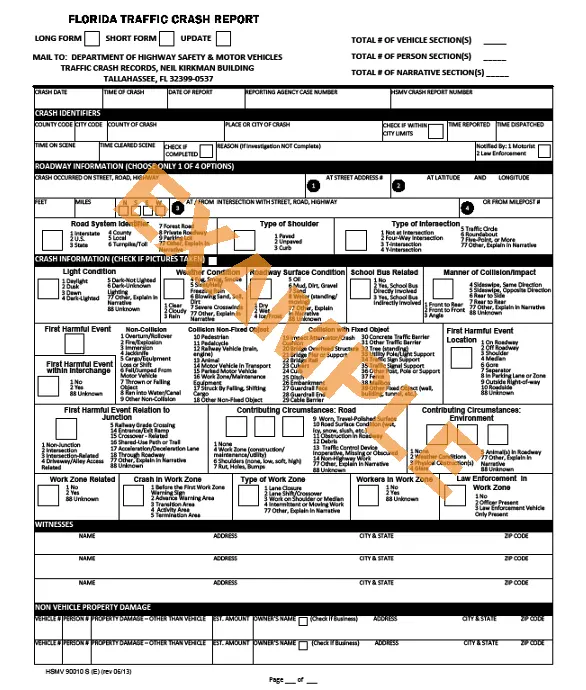
The report serves as an objective record of the collision and typically includes:
- Date and time of the accident
- Crash location
- Driver and passenger information
- Vehicle information
- Insurance information
- Road and weather conditions
- Witness information
- Officer observations
- Contributing factors
- Vehicle damage
- Injury information
- Diagram of the accident scene
Why Your Florida Accident Report Matters
Your accident report can become one of the most valuable pieces of evidence after a crash.
It may help:
- Support your insurance claim
- Identify all involved parties
- Document injuries reported at the scene
- Preserve important facts before memories fade
- Locate witnesses
- Establish roadway and weather conditions
- Assist your attorney during settlement negotiations
- Strengthen a personal injury lawsuit if litigation becomes necessary
The sooner you review your report, the easier it is to identify mistakes or missing information.
How to Read a Florida Police Accident Report
Florida crash reports contain multiple sections filled with codes, abbreviations, and technical information. Understanding each section can make the report much easier to interpret.
Report Information
The first page usually contains general crash information, including:
- Crash report number
- Date and time
- County
- City
- Investigating agency
- Reporting officer
- Case number
This information is used to identify and retrieve your report.
Driver Information
Each driver involved in the collision will have their own section listing:
- Full name
- Address
- Driver license information
- Date of birth
- Insurance carrier
- Policy number
- Vehicle ownership
Verify this information carefully to ensure there are no errors.
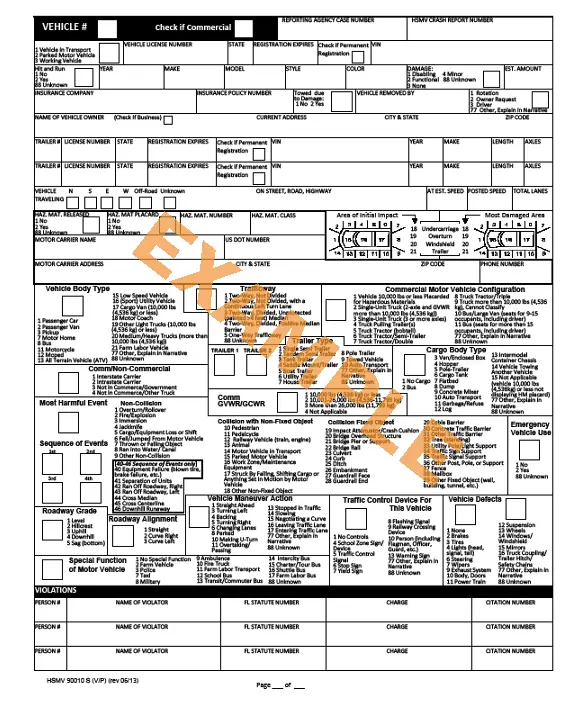
Vehicle Information
This section provides details about every vehicle involved, including:
- Year
- Make
- Model
- Vehicle Identification Number (VIN)
- License plate
- Registration information
- Vehicle damage
Vehicle damage descriptions often indicate where each vehicle was struck and the severity of the impact.
Injury Information
The officer documents any injuries that were visible or reported at the scene.
Possible injury classifications include:
- No injury
- Possible injury
- Non-incapacitating injury
- Suspected serious injury
- Fatal injury
Even if you felt fine immediately after the accident, injuries may develop later. Always seek medical evaluation as soon as possible.
Roadway Conditions
The report typically documents environmental factors such as:
- Weather
- Lighting
- Road surface
- Traffic controls
- Speed limit
- Road defects
- Construction zones
These details can become important if hazardous road conditions contributed to the collision.
Contributing Factors
The investigating officer may identify factors that appeared to contribute to the accident.
Examples include:
- Following too closely
- Speeding
- Failure to yield
- Distracted driving
- Improper lane change
- Driving under the influence
- Driver inattention
- Improper backing
These observations are not always final determinations of liability but often influence insurance investigations.
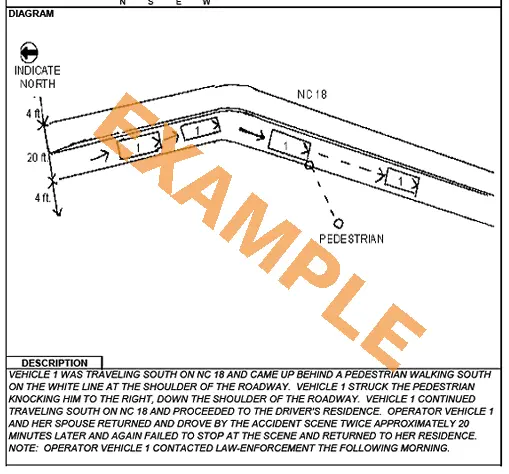
Diagram of the Accident
Most Florida crash reports include a diagram illustrating:
- Vehicle positions
- Direction of travel
- Lane markings
- Points of impact
- Traffic signals
- Road layout
The diagram provides a visual representation of how the officer believes the collision occurred.
Officer Narrative
One of the most important sections is the officer’s narrative.
The narrative summarizes:
- Statements from drivers
- Witness accounts
- Physical evidence
- Vehicle movements
- Officer observations
- Preliminary conclusions
Insurance adjusters frequently review this section when evaluating claims.
Common Florida Accident Report Codes
Florida crash reports often contain abbreviations and numerical codes.
Examples may include:
- Vehicle body styles
- Injury severity codes
- Roadway classifications
- Weather conditions
- Traffic control devices
- Driver actions
- Vehicle movements
An experienced personal injury attorney can explain what these codes mean and how they may affect your case.
What If Your Accident Report Contains Errors?
Police officers work quickly at accident scenes, and mistakes occasionally occur.
Common errors include:
- Misspelled names
- Incorrect insurance information
- Wrong vehicle descriptions
- Missing witnesses
- Incorrect accident location
- Inaccurate vehicle damage
- Incorrect statements
If you discover an error, do not ignore it. Notify the reporting agency and speak with a car accident attorney before submitting corrections that could affect your claim.
Can a Police Report Be Changed?
Minor factual mistakes can often be corrected if supporting documentation is available.
However, officers generally cannot change their opinions or conclusions simply because one party disagrees with them.
If important evidence was overlooked, your attorney may gather additional evidence such as:
- Surveillance footage
- Dashcam video
- Photographs
- Witness statements
- Cell phone records
- Accident reconstruction reports
This evidence may help establish liability regardless of what appears in the original report.
How Miami Lawyers 360 Can Help
Reading a Florida police accident report is only the first step after a serious crash. Understanding how the information affects your legal rights is equally important.
Our legal team can:
- Review your accident report line by line
- Explain confusing codes and terminology
- Identify inaccuracies
- Gather additional evidence
- Communicate with insurance companies
- Calculate your damages
- Pursue maximum compensation for your injuries
Whether your accident occurred in Miami, Fort Lauderdale, Orlando, Tampa, Jacksonville, or anywhere in Florida, we are ready to help you understand your options.

Frequently Asked Questions
Is a Florida police accident report the final determination of fault?
No. A crash report contains the investigating officer’s observations and preliminary findings, but it does not legally determine fault. Insurance companies, attorneys, and courts may consider additional evidence before liability is established.
How long does it take for a Florida accident report to become available?
Most Florida crash reports become available within several days after the accident, although complex investigations may take longer.
Can I obtain a copy of my own accident report?
Yes. Drivers, passengers, vehicle owners, attorneys, and insurance companies are generally permitted to request a copy of the report, subject to Florida’s crash report privacy laws.
What should I do if information in the report is incorrect?
Gather any documentation that supports the correction, notify the investigating agency if appropriate, and speak with an attorney before making changes that could affect your insurance claim.
Will insurance companies use my accident report?
Yes. Insurance adjusters often review the police report when investigating liability, evaluating damages, and determining how to handle your claim.
Should I hire an attorney if I already have my police report?
Yes. Your accident report is only one piece of evidence. An attorney can investigate the crash, collect additional evidence, negotiate with insurers, and pursue compensation that fully reflects your injuries and losses.
Let Miami Lawyers 360 Help You Understand Your Florida Accident Report
Your Florida police accident report can significantly impact your insurance claim and any future personal injury case. Understanding what the report says—and what it doesn’t say—can make a meaningful difference in protecting your rights.
If you’ve been injured in a Florida car accident, the attorneys at Miami Lawyers 360 are ready to review your crash report, explain your legal options, investigate your accident, and fight for the compensation you deserve.
Contact Miami Lawyers 360 today for a free consultation. We’ll review your Florida police accident report, answer your questions, and help you take the next step toward recovery with confidence.